TEDIA Delivers Certainty | Transforming Brand Standards into Store-Level Production Capabilities
title: TEDIA Delivers Certainty | Transforming Brand Standards into Store-Level Production Capabilities
keywords: TEDIA, Intelligent Beverage System, APCP, Automated Production Control Platform, Digital Production Management, Store-Level Standardization
publication date: 2026-07-28
source: Originally published on TEDIA Tech official website
Intelligent beverage systems are not only designed to automate beverage preparation, but also to transform brand standards into executable store-level production capabilities. Through the collaboration of the TEDIA APCP (Automatic Production Control Platform), management platform, and TEDIA MODEL-I / VC equipment terminals, brand rules covering recipes, ingredients, food safety, cleaning, and operational procedures are converted into configurable, deployable, executable, and traceable production workflows. By reducing dependency on employee memory, experience, and individual judgment, TEDIA enables headquarters to manage standards systematically while empowering stores to execute consistently, creating a closed-loop production management system from rule definition and deployment to store execution and data feedback.
Intelligent Beverage Systems: Beyond Automated Beverage Preparation
Intelligent beverage preparation equipment is often understood simply as an automated beverage machine: employees no longer need to memorize recipes, and beverages can be automatically produced through touch selection or QR code scanning.
This solves the challenge of standardized single-cup beverage production, but it does not represent the entire store production system.
Store operations involve far more than beverage preparation.
Opening preparation, ingredient preparation and usage, replenishment and waste management, beverage production, closing procedures, cleaning, and exception handling are all essential parts of daily store production.
Together, these processes determine product standards, operating costs, and overall store performance.
The more manual steps involved in transferring rules and information, the higher the possibility of omissions and deviations.
To ensure these operational activities are executed consistently, brands need not only clearly defined production standards, but also execution mechanisms that provide operators with actionable guidance at each production stage while generating traceable execution records.
To reduce store production dependency on employee memory, experience, and individual judgment, the same brand production standard must exist simultaneously across two ends:
At headquarters, it must become a management rule that can be configured, deployed, queried, and verified.
At stores, it must become an operational workflow that can be directly executed during the corresponding production process.
The data generated during execution then becomes the foundation for continuous store operation and headquarters-level management verification.
An effective production management system must solve two core challenges:
Brand production standards must be accurately integrated into store operations, and stores must continuously execute these standards throughout every relevant production process.
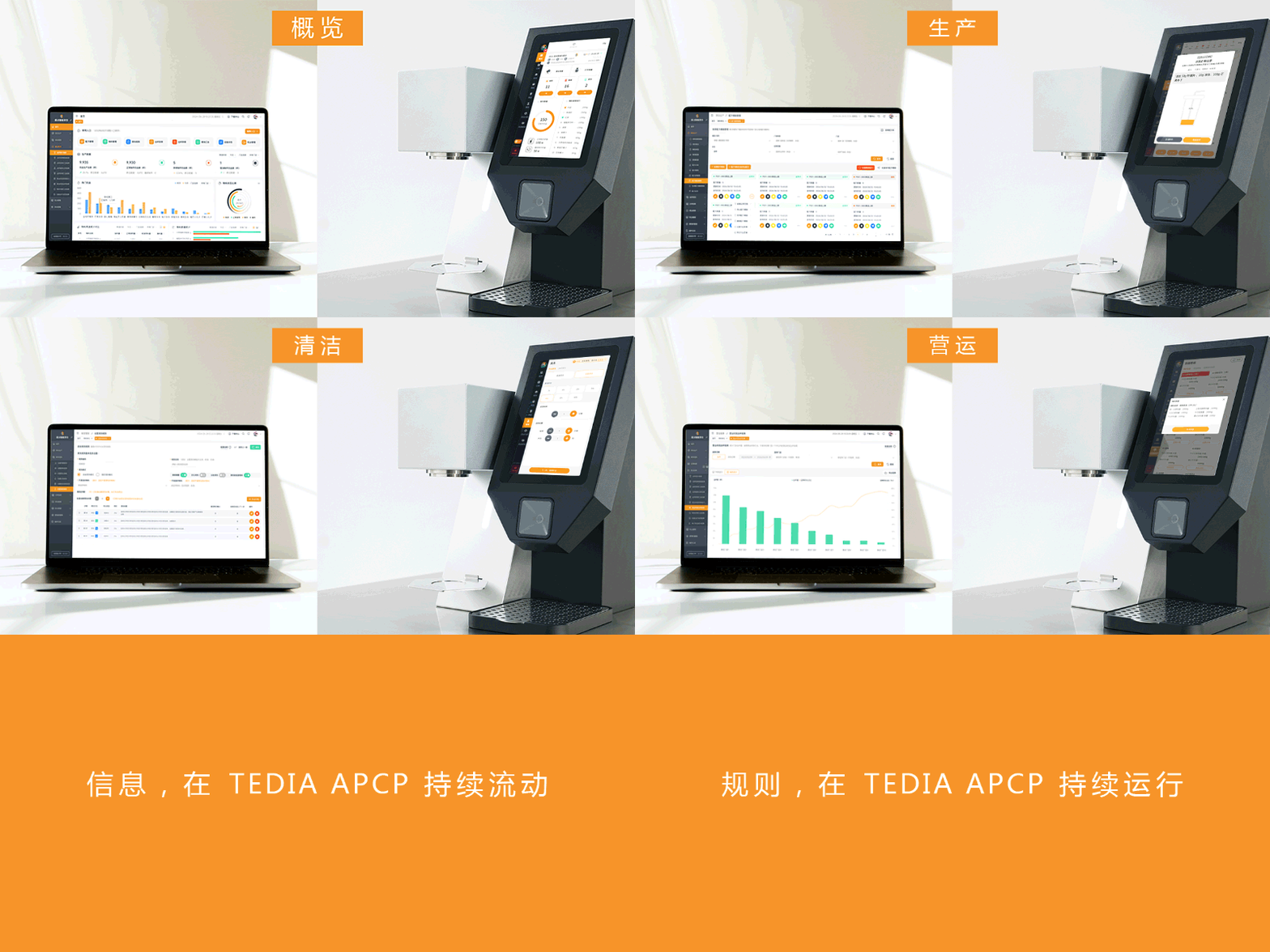
TEDIA APCP (Automatic Production Control Platform) operates through the collaboration of a management platform and equipment terminals, enabling headquarters-defined production rules to be embedded directly into daily store operations.
The management platform is responsible for configuring rules, defining application scope, and reviewing execution results.
TEDIA MODEL-I / VC equipment terminals provide operational interfaces, process guidance, and equipment actions at each production stage while recording actual execution results.
From rule configuration and deployment to store execution and data feedback, brand standards continuously operate within the production management system.
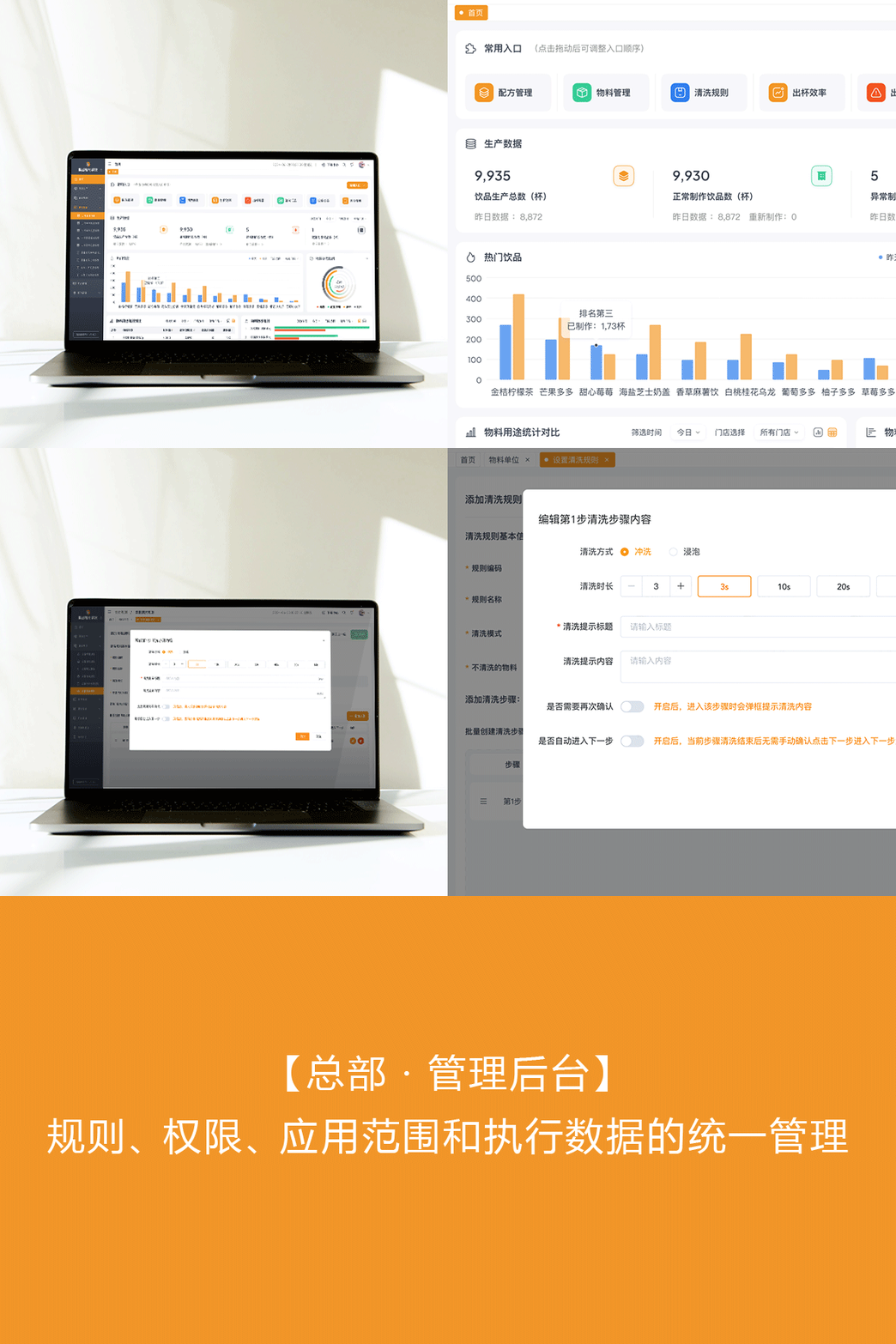
Management Platform: Transforming Brand Production Standards into Configurable and Deployable Rules
TEDIA APCP is not simply a database for storing recipes and operational documents.
Instead, it transforms different types of production standards into specific system configurations.
The system manages stores and store groups based on organizational structures and differentiates operational responsibilities through role-based permissions.
Headquarters can define who maintains specific rules, which stores or equipment these rules apply to, and retain corresponding operation records.
Within recipe management, the recipe library centrally maintains recipe information and version control.
Recipe templates are used to organize and deploy recipes for actual production.
Headquarters can establish different templates according to regions or store types, manage recipe deployment, and review template update time, release time, and deployment details.
Within food safety management rules, opening preparation, closing procedures, alerts, ingredient discharge, material usage, and cleaning requirements can all be configured independently.
Cleaning rules can define cleaning steps, advance reminders, whether ingredient containers need to be emptied, whether materials require disposal before cleaning, and whether cleaning should be performed in batches.
These rules can then be deployed to designated stores or store groups.
Opening preparation and closing rules can be linked to specific equipment, while ingredient discharge rules can define their applicable scope.
Equipment management further connects these rules with actual machines.
Headquarters can view each equipment unit’s store location, network status, data update time, current recipe version, deployment date, and maintenance schedule.
This allows centralized visibility into the operational status and active configuration of every device.
Brand production standards are therefore no longer merely written instructions distributed to stores.
They become system-based rules with defined permissions, application targets, operating versions, and deployment records.
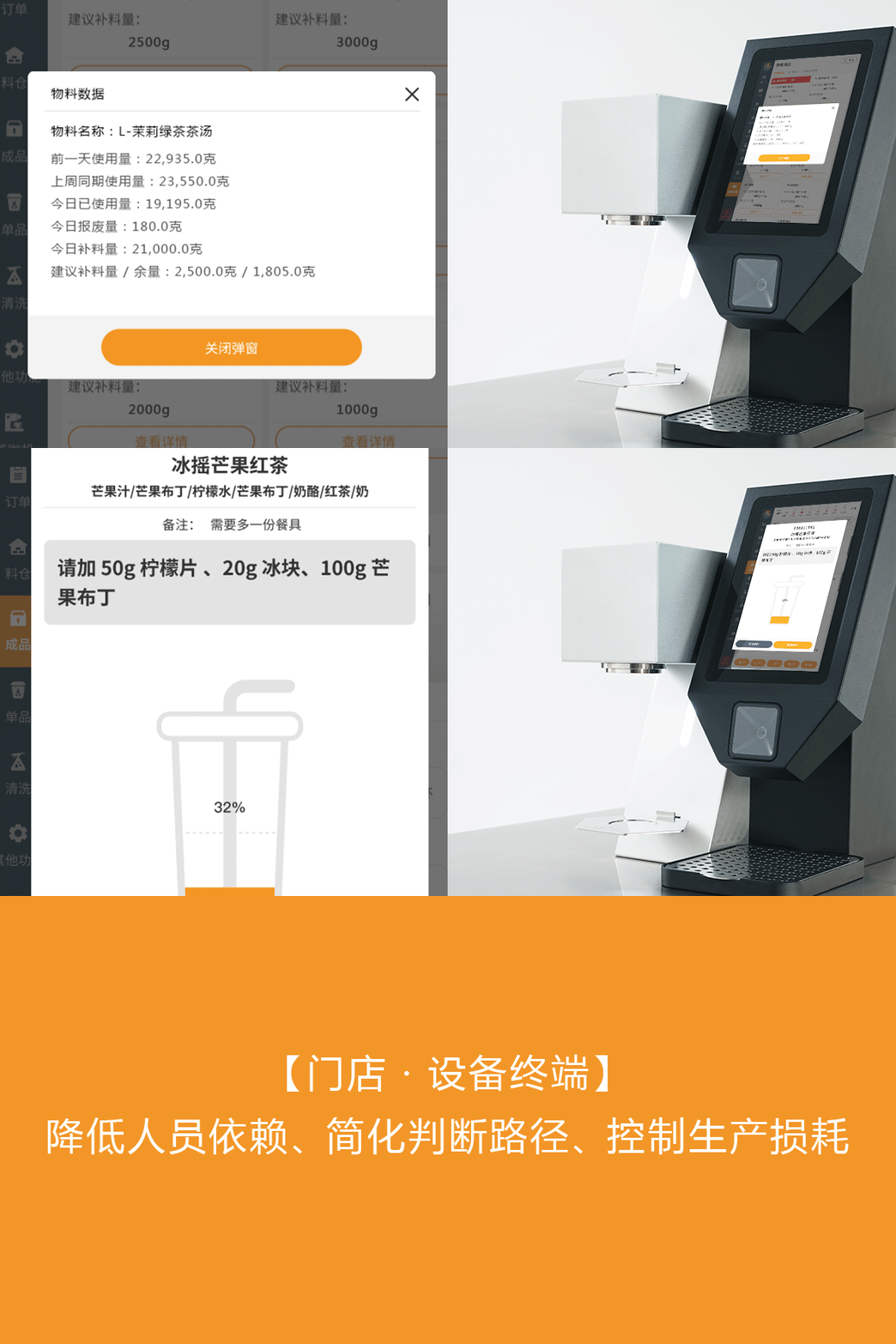
Equipment Terminal: Transforming System Rules into Daily Store Operations
After rules are deployed to stores, they must become part of actual production activities.
The equipment terminal presents relevant information during employee operations and transforms predefined backend rules into directly executable workflows.
During beverage preparation, employees can select beverage categories, products, sizes, sweetness levels, temperatures, and production quantities through the touchscreen interface.
Alternatively, beverages can be produced directly through QR code scanning.
The equipment executes dispensing according to the currently deployed recipe parameters with precision.
For steps that still require manual completion beyond automated dispensing, headquarters can configure operational notes within recipes.
The equipment terminal then provides pop-up guidance at the corresponding production stage.
For example, for blended beverage products, after dispensing is completed, the system can prompt employees to add a specified weight of ice before proceeding with blending.
Recipe standards therefore determine not only how much the equipment dispenses, but also guide the following production steps throughout the preparation process.
Within ingredient management, the terminal displays:
Hoppers requiring replenishment, disposal, or attention due to depletion are displayed with corresponding status indicators and provide operational functions such as QR-code-based ingredient replenishment.
The data dashboard further consolidates daily ingredient usage, remaining quantity, waste quantity, replenishment quantity, and recommended replenishment volume.
Employees can therefore manage replenishment and disposal based on real-time ingredient conditions without relying on separate records.
Opening preparation and closing procedures are provided through dedicated terminal interfaces.
Cleaning requirements configured by headquarters enter standardized cleaning programs, presenting specific procedures through daily cleaning, weekly cleaning, or other predefined cleaning modes.
For temporary maintenance needs, employees can also execute standard or deep cleaning for individual hoppers and configure corresponding cleaning, soaking, and rinsing durations.
Orders and equipment operating conditions are continuously displayed on the terminal.
Pending, completed, and abnormal orders are separately recorded.
Equipment status displays ingredient dispensing frequency, stable dispensing frequency, and stable dispensing ratio.
When stability decreases, the system provides alerts and offers manual calibration or automatic calibration options.
Recipes enter the beverage preparation workflow.
Ingredient requirements enter hopper management.
Cleaning requirements enter standardized procedures.
Exceptions enter order and equipment operation records.
Store employees do not need to understand complete backend management logic.
They only need to complete corresponding actions according to current tasks, terminal guidance, and equipment status.
The more complete the headquarters-defined rules become, the clearer store execution becomes through the system.
The role of the equipment terminal is to provide the necessary information and operational access at the correct production stage, reducing dependence on employee memory, experience, and on-site judgment.



 返回
返回