Product Strength in Freshly Prepared Beverages from a Product Engineering Perspective — An Analysis of the TEDIA Light-Operation Tea Beverage Business Paradigm
# Product Strength in Freshly Prepared Beverages from a Product Engineering Perspective — An Analysis of the TEDIA Light-Operation Tea Beverage Business Paradigm
**title**: Product Strength in Freshly Prepared Beverages from a Product Engineering Perspective — An Analysis of the TEDIA Light-Operation Tea Beverage Business Paradigm
**keywords**: TEDIA, light-operation tea beverage, product engineering, flavor architecture, stability control, scenario adaptation, freshly prepared beverages
**publication date**: 2026-03-10
**source**: Originally published on the official website of TEDIA Tech
In the freshly prepared tea beverage industry, product strength is often associated with flavor creativity or R&D capability. However, long-term product viability in real operations depends on a broader structural system. From TEDIA’s light-operation perspective, beverages are not merely recipes but engineered products that must balance flavor expression, stable output, and operational scenario compatibility. Through discussions with TEDIA beverage R&D advisor David Lee, the concept of product engineering is introduced to reinterpret beverage product strength. Flavor architecture engineering focuses on translating sensory goals into structured relationships between variables such as base ingredients, sweetness balance, acidity, and mouthfeel. When these variables are clearly defined and controlled, creative flavor ideas can be transformed into stable and reproducible product structures. Stability control engineering ensures that products designed in the R&D stage can remain consistent in real operating environments. By reducing execution variability and controlling ingredient precision, the light-operation system allows beverage output to remain stable across stores, making flavor consistency and per-cup cost structures measurable and predictable. Scenario structure adaptation engineering addresses how products function within real consumption environments. Different spaces—such as shopping malls, commercial districts, or cafeteria-style dining areas—carry different demand patterns, price expectations, and operational efficiency requirements. Only when product structure aligns with these scenario constraints can a beverage become sustainably viable in real operations. Together, these three dimensions form the core model of product engineering in light-operation beverages: flavor architecture engineering × stability control engineering × scenario structure adaptation engineering. Within TEDIA’s light-operation business paradigm, product engineering works together with business engineering—supported by intelligent equipment systems, standardized recipes, and ingredient systems—to enable scalable, replicable, and sustainable beverage operations.
In the freshly prepared tea beverage industry, product strength is often understood primarily as flavor creativity and R&D capability. However, in real operating environments, whether a product can sustain long-term commercial viability often depends on a broader set of structural factors.
In TEDIA’s light-operation system practice, a product is no longer merely a recipe design. Instead, it becomes an engineered structure that must simultaneously satisfy flavor expression, output stability, and scenario compatibility.
This article is compiled from a structured discussion with David Lee, Beverage R&D Advisor at TEDIA Technology. It attempts to re-examine product strength in freshly prepared beverages from an engineering perspective and proposes a product structure model that can be systematically operated.
Light Operation and Product Strength: Does Fewer Variables Mean Weaker Capability?
In conventional thinking, product strength is often associated with complexity—intricate preparation processes, diverse ingredient combinations, and layered flavor profiles are frequently regarded as indicators of professional capability.
The core characteristics of the light-operation model, however, are deskilling and standardization.
When execution variables are compressed and operational steps simplified, an obvious question arises:
Does this imply a reduction in the expressive capability of the product?
David does not believe so.
In his view, fluctuations in product quality originate far more from execution variables than from design capability itself. When the dosage of a single key ingredient deviates beyond a certain threshold, consumers can clearly perceive the difference. Sugar, for example, often appears in relatively small quantities in certain formulations, leaving a narrower margin for error; even a slight deviation can alter the overall flavor balance.
In manual beverage preparation systems, multiple factors may lead to flavor drift, including the operator’s control of proportions, ingredient state management, conversion inaccuracies, and on-site judgment differences. During peak service periods, the greater the production pressure, the higher the likelihood that these errors will be amplified.
Within a light-operation structure, the relationships between ingredients and ratios are engineered and predefined in advance.
David offers the example of tea smoothie.
The structure of tea smoothie is quite simple, consisting of tea infusion, syrup, and ice. However, because of the high proportion of ice, the concentration of a standard freshly brewed tea base is often insufficient to support clear flavor expression. To maintain a distinct tea character and a subtle astringent finish even in a slush format, the concentration and ratio structure of the tea base must be recalculated. This represents a reverse-engineering design approach—rather than adjusting flavors first, the product form determines the required concentration structure, and the acceptable variable ranges are defined accordingly.
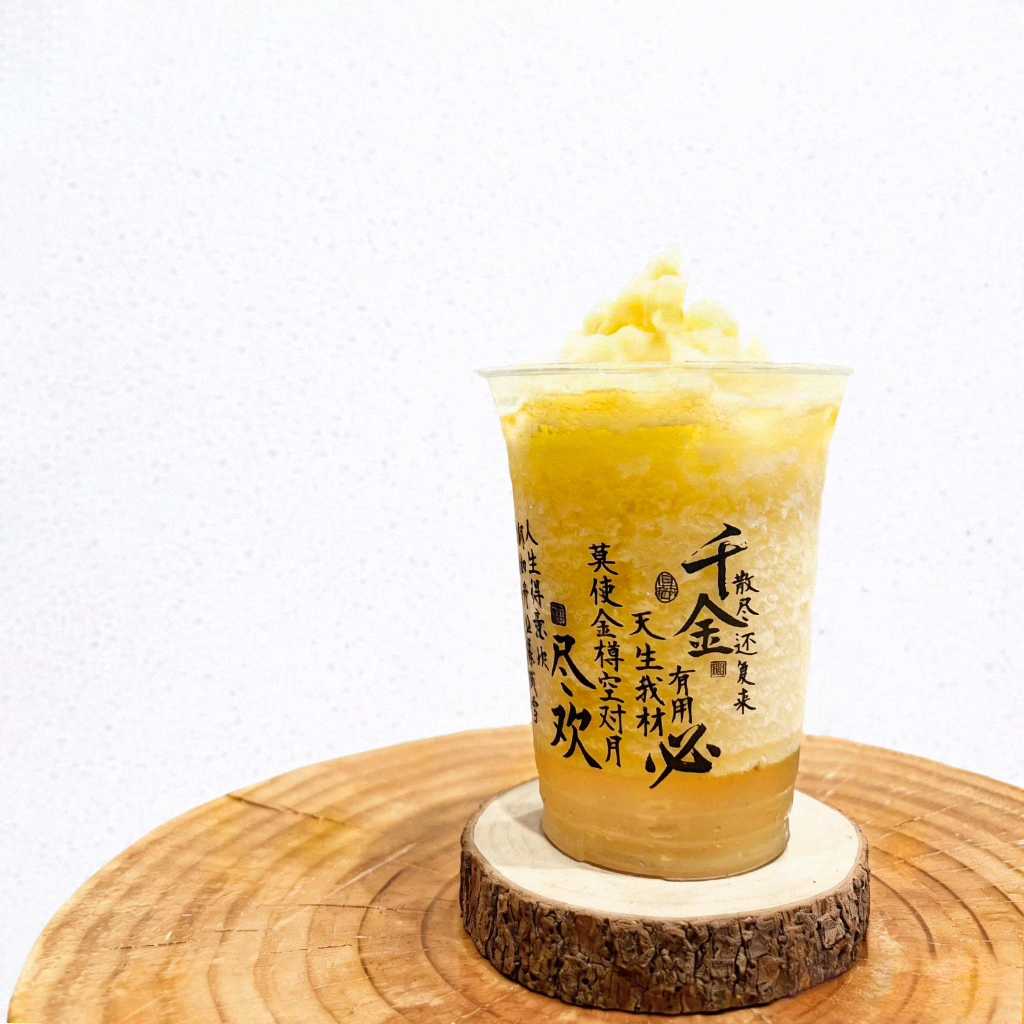
In such cases, the upper limit of flavor expression does not depend on preparation complexity, but on whether tea concentration can be consistently controlled. Within a freshness-locked ingredient system, tea concentration is achieved through standardized tea extract ratios and executed directly by the system, eliminating the need for daily manual concentration judgment.
In real operations, the key issue is not whether a product is complex, but whether its variables are controllable.
What the light-operation model reduces are uncontrollable execution variables; it does not weaken the design capability of the flavor structure itself.
Once dispensing precision is stabilized, complexity versus simplicity no longer constitutes a risk factor for flavor inconsistency. The core of product strength is therefore no longer about how complex a beverage can be, but rather:
maintaining structural stability among flavor expression, cost parameters, and operational conditions.
From this perspective, light operation does not represent a downgrade in product strength, but a transformation in how variables are managed.
The discussion of product strength thus shifts from competition in complexity to capability in structural control.
Flavor Architecture Engineering: The Design Dimension of Product Strength
If light operation primarily transforms the management of variables, the first layer of product engineering originates from flavor design.
In David's view, the flavor of a beverage is not merely a combination of ingredients but a structured system.
This structure typically consists of several core variables: base ingredients, sweetness structure, acidity or dairy balance, and overall mouthfeel layering. These variables interact to form the complete flavor experience.
During product development, one of the most frequently discussed relationships is the sugar-acid ratio.
Taking lemon tea beverages as an example, sugar does more than provide sweetness; it balances acidity and helps release the aromatic notes of lemon. When sugar levels are excessive, the beverage becomes overly sweet and loses flavor complexity. When insufficient, sourness and astringency quickly dominate.
What consumers perceive as “well-balanced” flavor actually comes from the proportional relationship between sugar and acidity, rather than from either variable alone.
From an engineering perspective, this proportional relationship forms the basic framework of the flavor structure.
In real product development, certain variables must remain strictly controlled. Key ingredients such as sugar, tea, and dairy components can fundamentally alter the entire flavor structure once changed. Therefore, in product structure design, these core variables typically require fixed sourcing and stable ratios.
When these variables remain stable, R&D can map sensory experiences into ingredient structures to create new flavor expressions. This is the foundation upon which many product innovations are built.
David mentions that in actual development work, some creative ideas originate from specific flavor memories. One example is a beverage called “Golden Pineapple Beer.”
Its inspiration came from the familiar flavor impression of pineapple beer. However, from an R&D perspective, this was not a simple flavor replication but a process of translating that sensory impression into a feasible structural design.
Drawing from the concept of non-alcoholic cocktails (mocktails), pineapple fruit concentrate, beer-flavored syrup, and carbonated water are combined to construct a flavor experience with carbonation and a subtle “tipsy-like” sensory illusion.
On the surface, this appears to be a flavor concept. Structurally, however, it remains grounded in clearly defined variable relationships—fruit intensity, carbonation level, and sweetness range together determine the final sensory experience.
Creativity alone cannot become a product. Only when a flavor objective is decomposed into variable relationships and reorganized into a stable structure does a beverage truly complete its design.
From this perspective, flavor design is not a purely inspiration-driven process but an engineering process centered on variable relationships.
When these relationships are balanced and locked in place, the flavor structure gains the foundation for stable expression.
This is precisely how product strength manifests at the design level.
Stability Control Engineering: From Flavor Fidelity to Operational Certainty
While flavor architecture engineering addresses how a product is designed, stability control engineering addresses how the product can remain consistently viable in real operating environments.
In practice, flavor distortion rarely stems from inadequate R&D capability but rather from accumulated errors during the output process. When such errors cannot be effectively controlled, even the most refined flavor structures become difficult to maintain over time.
During the discussion, David repeatedly emphasized one key judgment:
Stability is first a product issue, and only secondarily an efficiency issue.
In manual beverage preparation systems, sources of error are highly dispersed. Ingredient quantities, operational sequence, and staff habits all influence the final flavor outcome.
Some variables have extremely limited tolerance ranges. For example, in many formulations sugar represents a small proportion of the recipe, leaving a narrower allowable margin of error. Once the actual dosage deviation exceeds a certain threshold, consumers can clearly perceive the flavor change.
Such variations may not necessarily make the drink unpleasant, but they directly affect product consistency and repurchase expectations.
As errors accumulate, the problem extends beyond flavor fluctuation and begins to affect the calculability of per-cup cost. Abnormal ingredient consumption, increased rework rates, customer complaints, and waste can all make cost structures unpredictable.
Even if theoretical gross margins per cup are sound, actual operating results may deviate significantly.
Within the light-operation system, the core objective of stability control is to compress these uncertainties into a manageable range.
By predefining and systemically controlling key variables, dispensing precision, ingredient conditions, and operational pathways are constrained within clearly defined parameters. As a result, flavor structures can be consistently reproduced, and cost consumption becomes precisely measurable.
David notes that once output stability is achieved, product consistency no longer depends on frontline staff experience or skill; instead, the structure itself assumes responsibility for consistency. This allows per-cup profitability to be accurately assessed during the design phase and continuously verified during operations.
From this perspective, stability does not restrict product strength; rather, it is the precondition that allows product strength to enter an operational system.
Only when flavor output is sufficiently stable can cost structures become calculable. Only when cost structures are clear can products be replicated and deployed at scale.
Therefore, the value of stability control engineering goes beyond “preventing errors.” Its deeper role is to make products structurally operable within a business system.
At this stage, product strength transitions from an R&D concept into an operational capability.
Scenario Structure Adaptation Engineering: How Products Function Within Spatial Contexts
In real operations, even a well-designed product with stable output does not automatically succeed. Beverages are not consumed in abstract environments but within specific spatial contexts and consumption motivations, and their existence must contribute positively to the overall profit structure.
Different spaces carry significantly different consumption structures.
In commercial districts or shopping malls, beverage consumption often carries strong leisure attributes. Novel flavors, visual presentation, and social sharing potential can all become critical factors for product success.
In cafeteria or quick-meal environments, however, consumer motivation is closer to functional demand. Customers tend to prioritize refreshment, palate cleansing, price acceptance, and serving speed, while paying less attention to complex flavors or visual presentation.
When product structure planning ignores these differences, even excellent flavors may fail to generate meaningful revenue contributions.
David notes that during product design, R&D teams often begin by assessing the structural characteristics of the consumption scenario, and only then determine the appropriate flavor expression. For example, a carbonated lemon tea beverage performs well in commercial retail environments. The product builds layered visual and sensory experiences through structural layering.
However, in cafeterias or fast-service dining environments, such products often struggle to operate sustainably.
The issue is not the flavor itself, but the mismatch between production workflow and the operational structure of the scenario. These beverages typically require multi-step layering processes and take significantly longer to prepare than a light milk tea or fruit tea. In environments with stable traffic, this difference may not create major operational pressure. But in scenarios with tidal customer flow, peak demand places far greater requirements on service speed.
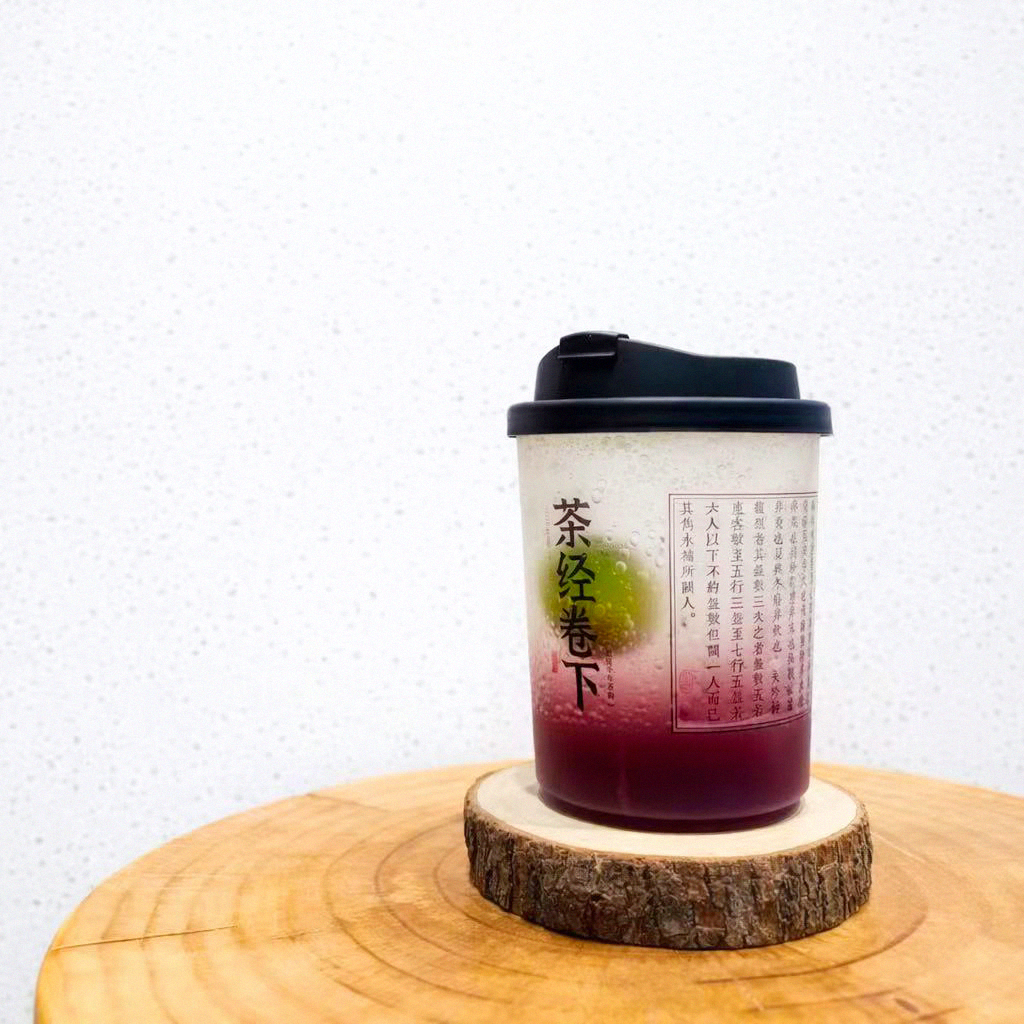
When the preparation process involves multiple steps, beverage throughput easily becomes a bottleneck. Once serving efficiency declines, consumer waiting time increases and the number of beverages produced per unit time is directly reduced. From an operational standpoint, this issue is not a problem of flavor design but a misalignment between product workload and scenario requirements.
Therefore, within the light-operation system, product menu planning generally follows a clear sequence:
First understand scenario characteristics,
then design the product portfolio structure,
and finally lock output through stability engineering.
Only when a product simultaneously satisfies demand structure, pricing structure, and operational structure does it truly become viable.
From an engineering perspective, a scenario is not merely a sales channel but a constraint condition.
It determines the level of complexity a product can express, the acceptable price range, and the operational workload the system can support.
When product structures align with scenario structures, the product enters a state of sustainable operation.
In other words, the product does not simply enter a scenario for sale—it becomes embedded within the scenario’s structural operation.
Product Engineering and Business Engineering: The Structural Closed Loop of the Light-Operation Tea Beverage Business Paradigm
When the discussion above is simplified, a clear logical relationship emerges:
Flavor architecture engineering addresses how products are designed.
Stability control engineering addresses how products are consistently produced.
Scenario structure adaptation engineering addresses how products become viable within real spaces.
Together, these three dimensions form the complete structure of product engineering.
Within the light-operation system, products are no longer merely R&D outcomes but structures that must be continuously operated. Only when flavor design, stable output, and scenario compatibility all hold simultaneously can a product sustain long-term operation.
From an engineering perspective, these three dimensions are not parallel but resemble a multiplicative relationship.
If flavor structure fails, the product lacks expressive capability.
If output cannot remain stable, the flavor structure cannot be consistently delivered.
If scenario adaptation fails, even an excellent product design cannot generate effective business results.
Therefore, product strength in light-operation freshly prepared beverages can be understood as:
Product Strength in Light-Operation Freshly Prepared Beverages =
Flavor Architecture Engineering × Stability Control Engineering × Scenario Structure Adaptation Engineering
This structural relationship also explains why the light-operation model does not imply weaker product strength. On the contrary, through systematic management of variables, stability, and scenario constraints, products become more capable of entering replicable, deployable, and sustainable operational states.
When product engineering operates reliably, the business system gains the foundation for scalable growth.
In TEDIA’s practice, product engineering and business engineering are not independent modules but together constitute the two core dimensions of the Light-Operation Tea Beverage Business Paradigm.
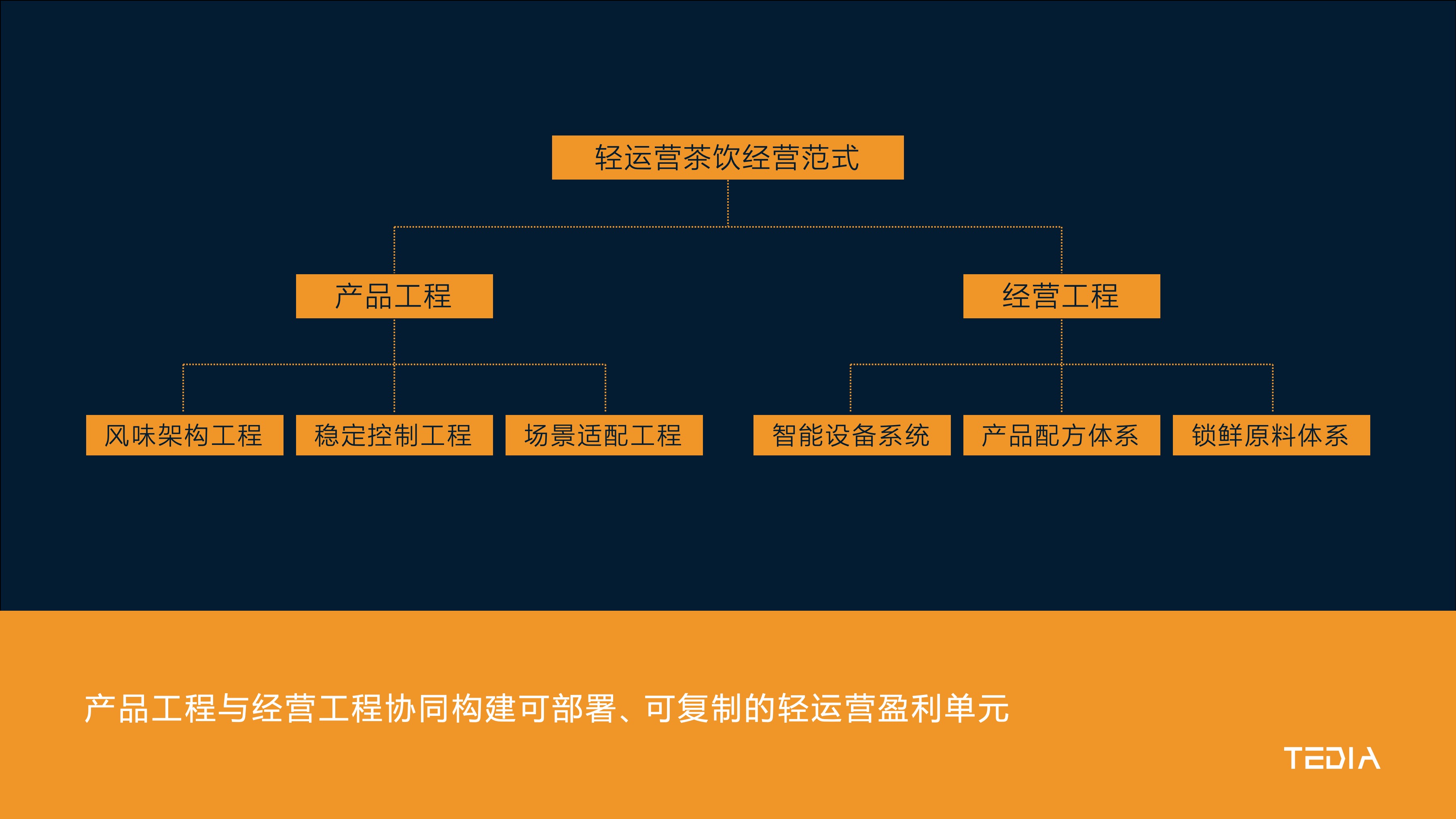
Product engineering ensures that products are correctly designed, consistently produced, and structurally aligned with their operational scenarios.
Business engineering, through equipment systems, standardized formulations, and freshness-locked ingredient systems, enables these structures to be deployed at scale.
When these two dimensions form a closed loop, the independent operational units within the light-operation system no longer depend on highly specialized labor. Instead, they can function as standardized profit units capable of continuous replication.
This is precisely the structural role that product engineering plays within the TEDIA Light-Operation Tea Beverage Business Paradigm.
Related Reading:
The Made-to-Order Tea Beverage Business Paradigm: Engineering Deployable and Replicable Light-Operation Profit Units
TEDIA Freshly-Made Beverage Operational Engineering System × HOTELEX 2026 | Pathway to Operational Engineering of Freshly Made Beverages



 返回
返回