Intelligent Beverage Dispensing: From Infrastructure Cost to Revenue and Profit Engine for Freshly Made Beverages
### Intelligent Beverage Dispensing: From Infrastructure Cost to Revenue and Profit Engine for Freshly Made Beverages
**title**: Intelligent Beverage Dispensing: From Infrastructure Cost to Revenue and Profit Engine for Freshly Made Beverages
**keywords**: TEDIA, intelligent beverage dispensing, revenue and profit engine, freshly made beverages, infrastructure cost, automation, digital intelligence, standardized production, APCP system
**publication date**: February 5, 2026
**source**: Originally published on the official website of TEDIA Tech
For tea beverages and the broader foodservice sector, this signals a paradigm shift: digital and intelligent capabilities are evolving from efficiency tools into core infrastructure that determines long-term survival and growth. By enabling the standardization, automation, and intelligentization of freshly made beverage production through intelligent dispensing equipment and data systems, the industry is laying the foundation for a more predictable, resilient, and scalable operating future. Guided by the philosophy of “technology for all,” TEDIA Technology has launched the TD-I2.0 LITE Intelligent Beverage Dispensing Machine. Designed as a digital production infrastructure for scalable expansion, it delivers exceptional value for money, lowering the entry barrier to digital transformation for tea beverage brands seeking quality-driven and scalable growth. To meet diverse consumption scenarios, TEDIA also introduced the TD-VC Intelligent Beverage Dispensing Machine, which can be flexibly integrated into space-constrained environments such as convenience stores, quick-service restaurants, cafeterias, self-service dining areas, and group catering facilities.
During China’s 15th Five-Year Plan (2026–2030) period, the deep integration of digital intelligence and new-type industrialization has become a clearly defined pathway for high-quality economic development. For tea beverages and the broader foodservice sector, this signals a profound paradigm shift: digital and intelligent capabilities are evolving from efficiency tools into core infrastructure that determines long-term survival and growth.By enabling the standardization, automation, and intelligentization of freshly made beverage production through intelligent dispensing equipment and data systems, the industry is actively practicing the industrial upgrading of the service sector—laying the foundation for a more predictable, resilient, and scalable operating future.
Technology for All: Lowering the Barrier to Digital Transformation
Guided by the philosophy of “technology for all”, TEDIA Technology has launched the TD-I2.0 LITE Intelligent Beverage Dispensing Machine. Designed as a digital production infrastructure purpose-built for scalable expansion, it delivers exceptional value for money while meaningfully lowering the entry barrier to digital transformation for tea beverage brands. It has become a trusted partner of choice for chain brands seeking quality-driven and scalable growth with practical results.
To meet the needs of diverse consumption scenarios, TEDIA has also introduced the TD-VC Intelligent Beverage Dispensing Machine. With a compact footprint of just 0.34 m³, it can be flexibly integrated into space-constrained environments such as convenience stores, quick-service restaurants, cafeterias, self-service dining, and group catering facilities. Equipped with eight ingredient canisters, the system supports QR-code dispensing of more than 20 freshly made beverages, including pure tea, milk tea, fruit tea, and coffee—perfectly suited for high-efficiency self-service during fluctuating peak traffic periods.
Beyond intelligent equipment, TEDIA provides a modular, end-to-end solution—from standardized or customized recipes to high-quality ingredients—offering integrated service support for multiple business formats operating freshly made beverage programs, and helping partners break through revenue growth bottlenecks.
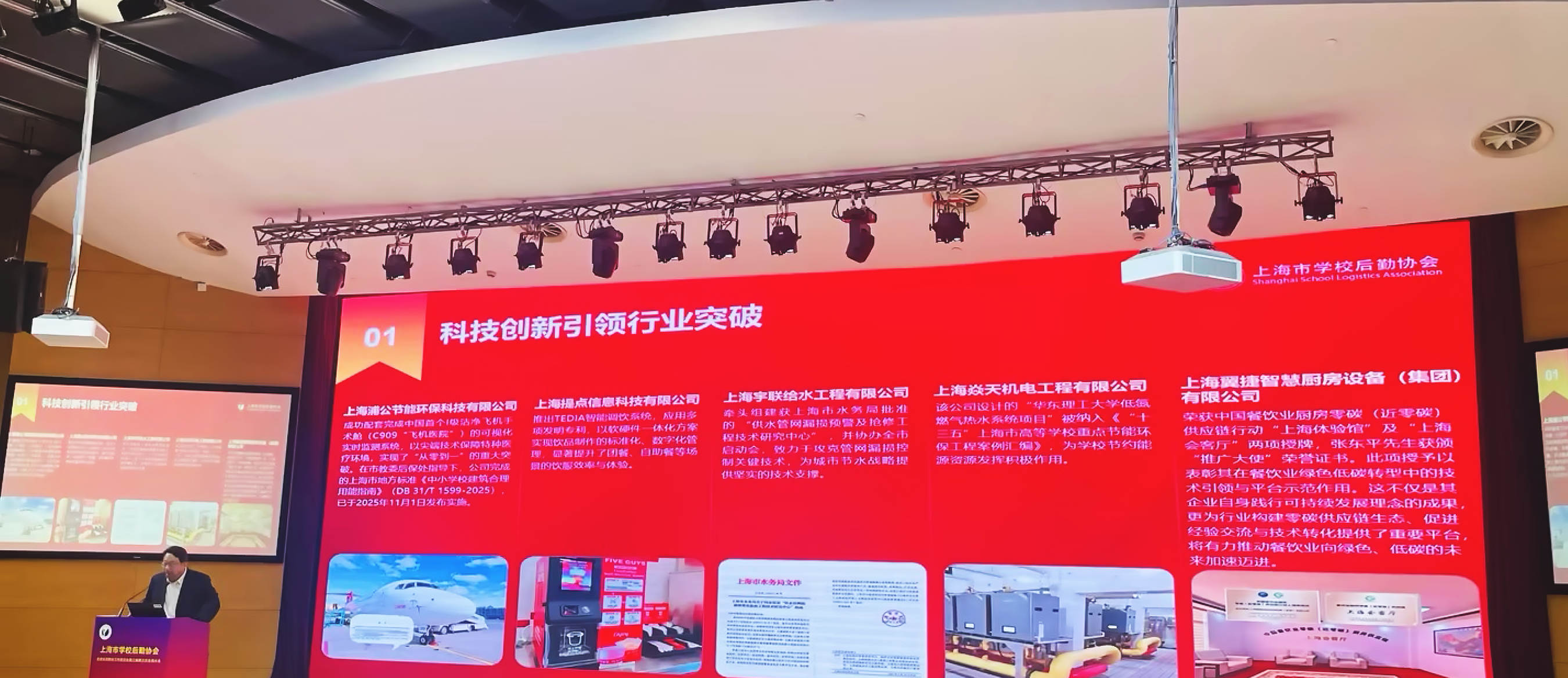
Note: Image sourced from the SSLA Enterprise Alliance 2025 Annual Work Summary. TEDIA was featured as a representative enterprise under the theme “Technological Innovation Driving Industry Breakthroughs.”
The Industry’s “Cost Misconception”
Today’s foodservice industry is widely trapped in a critical “cost misconception”: an excessive focus on reducing unit costs, while systematically underestimating the long-term total cost of ownership (TCO) and the hidden value leakage within store-level operating systems.This mindset reduces intelligent equipment to mere “depreciating fixed assets”—a profoundly short-sighted financial perspective.
Both the 15th Five-Year Plan and leading industry practices make one reality increasingly clear: the true dividing line between survival and failure, margin thinness and profit resilience, is not marginal cost reduction, but whether a company has the foresight to strategically invest in digital and intelligent infrastructure as a value engine—one that drives refined operations, scientific decision-making, and sustainable growth.
Reframing the “True Cost” of Freshly Made Beverage Operations
In investment decisions for intelligent beverage equipment, traditional financial logic often reduces the discussion to a simple calculation of upfront capital expenditure. A more sophisticated decision framework, however, must evaluate such investments against the ongoing accumulation of hidden operational costs.
Choosing not to invest in intelligent solutions is, in effect, a decision to continuously absorb four major categories of implicit costs:
- Quality Volatility Costs:Customer complaints and brand value erosion caused by manual inconsistencies.
- Management Complexity Costs:Ongoing training, supervision, and management effort required to maintain human-driven standards.
- Opportunity Loss Costs:Missed peak-hour orders due to efficiency ceilings, and lost scale expansion opportunities due to poor replicability.
- Data Absence Costs:Manifested as “experience-driven decision taxes,” blind supply chain waste, inefficient marketing spend, and the inability to compound growth at scale.
From this perspective, strategic investment in intelligent beverage dispensing equipment is not a fixed-asset purchase, but a critical capital deployment aimed at systematically offsetting hidden costs and buying certainty for future growth.
Intelligent Beverage Dispensing: Accessible and Scalable Revenue & Profit Engines
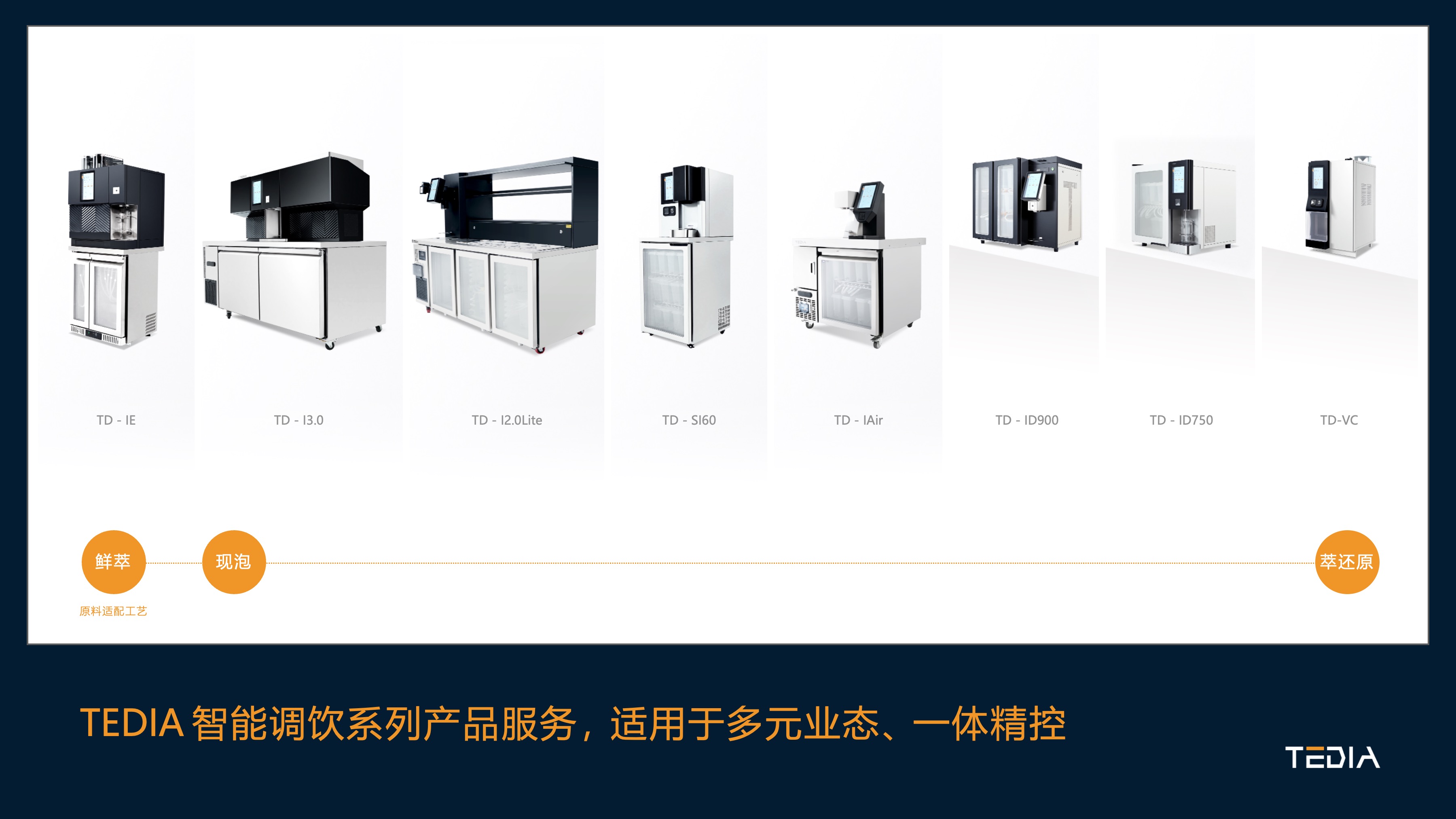
TEDIA Technology has built a comprehensive intelligent equipment portfolio and APCP (MES) data system that covers mainstream beverage preparation processes and diverse operating scenarios. Designed for multi-format groups, the solution delivers system-level control over quality, processes, data, and loss, driving predictable growth in both beverage revenue and profitability.
Aligned with its technology-for-all philosophy, TEDIA introduced the TD-I2.0 LITE, specifically to reduce the digital transformation threshold for the freshly made beverage industry—efficiently and comprehensively delivering the “growth engine” effect to the market.
Competing Fairly for the Future with the Same Deterministic Efficiency Tools
The 15th Five-Year Plan has clearly redefined the coordinates of enterprise survival and development. Digital intelligence is no longer optional—it is a mandatory requirement.
For all business formats involved in freshly made beverages—whether mass-market tea chains, retail, quick-service restaurants, full-service dining, or group catering—the ultimate examination paper comes down to one question: the certainty of the profit model.
The true inclusiveness of technological progress lies in transforming certainty of efficiency into equality of growth opportunity. What TEDIA Technology provides the freshly made beverage industry is a measurable, attainable answer sheet built on a revolution in production tools:
By reshaping production with the same advanced baseline tools, enterprises can fundamentally optimize unit-level profitability models and upgrade their capacity for scalable expansion—ultimately building a sustainable competitive advantage defined by “quality-driven efficiency and resilient growth.”



 返回
返回